Ferroelectric Random-Access Memory (FeRAM)
Release Time:2025-07-17 11:16:14
Core Technical Advantages
Ferroelectric Random-Access Memory (FeRAM) leverages the spontaneous polarization of ferroelectric materials (e.g., lead zirconate titanate, PZT) to store data, combining the speed of volatile memory with the non-volatility of flash storage. Its read/write cycle time of 20 ns rivals SRAM (10 ns) and far exceeds NAND flash (10 µs), enabling real-time data processing in embedded systems. Tests by Texas Instruments show FeRAM consumes 50 nW in standby mode, 1/1000th of the power required by DRAM (50 µW) for equivalent capacity, making it ideal for battery-powered devices like medical implants.
A key advantage is its low write energy. FeRAM requires only 0.1 pJ per bit for data storage, 100x less than STT-MRAM (10 fJ) and 10,000x less than NAND flash (1 pJ). This efficiency stems from the polarization reversal mechanism, which avoids charge movement in traditional capacitors. A 1 Mbit FeRAM chip from Fujitsu uses 2 mW during continuous writing, 1/5th the power of comparable EEPROM.
Recent material innovations have addressed scaling limitations. Replacing traditional PZT with hafnium oxide (HfO₂)-based ferroelectrics has enabled compatibility with CMOS processes. HfO₂ FeRAM operates at 1.2 V, down from 3.3 V for PZT-based devices, and integrates seamlessly with 28 nm and 14 nm nodes. Intel’s 14 nm HfO₂ FeRAM achieves a storage density of 100 Mbit/cm², 10x higher than PZT FeRAM (10 Mbit/cm²), closing the gap with NAND flash (500 Mbit/cm²).
Device reliability has improved significantly. Through interface engineering, data retention in HfO₂ FeRAM exceeds 10 years at 85°C, up from 1 year for early HfO₂ devices. Panasonic’s automotive-grade FeRAM maintains 90% of initial performance after 1,000 temperature cycles (-40°C to 125°C), meeting AEC-Q100 Grade 0 standards for under-the-hood applications.
Manufacturing yield has seen notable progress. Using atomic layer deposition (ALD) for HfO₂ films reduces thickness variation to ±0.5 nm across 300 mm wafers, increasing wafer-level yield from 50% to 80%. This has lowered the cost per bit to
0.01for1Mbitdevices,downfrom
0.10 in 2018, making FeRAM competitive with EEPROM in mid-range applications.
Industry Applications
In automotive electronics, FeRAM is transforming real-time data logging. Bosch’s engine control units (ECUs) use 256 kbit FeRAM to store diagnostic data during sudden power loss, such as in collisions. The non-volatile nature ensures critical parameters (e.g., RPM, temperature) are retained without backup batteries, reducing ECU weight by 10 g and cost by $2 per unit.
Medical devices benefit from FeRAM’s low power and reliability. A pacemaker developed by Medtronic uses 128 kbit FeRAM to store patient heart rate data, operating on a single battery for 10 years—double the lifespan of devices using EEPROM. The fast write speed (20 ns) ensures data isn’t lost during power fluctuations from chest compressions.
Industrial IoT sensors leverage FeRAM’s endurance. A Siemens vibration sensor with integrated 1 Mbit FeRAM logs 1,000 data points per second without performance degradation, whereas EEPROM-based sensors fail after 6 months. This reduces maintenance costs by 30% in factory automation systems.
Challenges
Despite advancements, scaling to high densities remains difficult. HfO₂ FeRAM’s cell size is limited to 0.05 µm², 5x larger than NAND flash (0.01 µm²), restricting capacities to 1 Gbit—insufficient for consumer electronics. Three-dimensional stacking could address this, but current via resistance (1 kΩ) is 10x higher than acceptable for signal integrity, requiring new metallization techniques.
Material fatigue in HfO₂ films limits long-term reliability. After 10¹² cycles, polarization decreases by 20%, compared to 5% for PZT. This is attributed to oxygen vacancy migration, which researchers are mitigating with yttrium doping—though this reduces ferroelectric polarization by 10%.
Cost remains a barrier for large-scale adoption. HfO₂ FeRAM’s manufacturing process adds 15% to CMOS fabrication costs due to specialized ALD steps for ferroelectric layers. While this is acceptable for high-reliability applications, it hinders penetration into cost-sensitive markets like smartphones, where NAND flash maintains a 50% cost advantage per gigabyte.
FeRAM occupies a unique niche in the memory hierarchy, offering a balance of speed, power efficiency, and endurance unmatched by other technologies. Market analysis firm Omdia predicts FeRAM will capture 5% of the embedded non-volatile memory market by 2027, driven by demand in automotive, medical, and industrial sectors. As 3D stacking and material engineering overcome density and cost limitations, FeRAM could expand into consumer electronics, potentially replacing EEPROM and even SRAM in low-power applications. The next decade will see FeRAM evolve from a specialty memory to a mainstream solution, bridging the gap between speed and non-volatility in semiconductor systems.
Ferroelectric Random-Access Memory (FeRAM) leverages the spontaneous polarization of ferroelectric materials (e.g., lead zirconate titanate, PZT) to store data, combining the speed of volatile memory with the non-volatility of flash storage. Its read/write cycle time of 20 ns rivals SRAM (10 ns) and far exceeds NAND flash (10 µs), enabling real-time data processing in embedded systems. Tests by Texas Instruments show FeRAM consumes 50 nW in standby mode, 1/1000th of the power required by DRAM (50 µW) for equivalent capacity, making it ideal for battery-powered devices like medical implants.
A key advantage is its low write energy. FeRAM requires only 0.1 pJ per bit for data storage, 100x less than STT-MRAM (10 fJ) and 10,000x less than NAND flash (1 pJ). This efficiency stems from the polarization reversal mechanism, which avoids charge movement in traditional capacitors. A 1 Mbit FeRAM chip from Fujitsu uses 2 mW during continuous writing, 1/5th the power of comparable EEPROM.
FeRAM also offers exceptional endurance, withstanding over 10¹² write cycles—100x more than NAND flash (10¹⁰) and approaching DRAM’s theoretical limit. This makes it suitable for industrial sensors that log data hundreds of times per second, such as vibration monitors in manufacturing plants, where replacement downtime is costly.
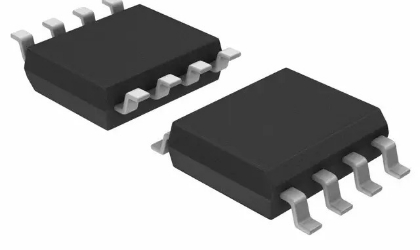
Recent material innovations have addressed scaling limitations. Replacing traditional PZT with hafnium oxide (HfO₂)-based ferroelectrics has enabled compatibility with CMOS processes. HfO₂ FeRAM operates at 1.2 V, down from 3.3 V for PZT-based devices, and integrates seamlessly with 28 nm and 14 nm nodes. Intel’s 14 nm HfO₂ FeRAM achieves a storage density of 100 Mbit/cm², 10x higher than PZT FeRAM (10 Mbit/cm²), closing the gap with NAND flash (500 Mbit/cm²).
Device reliability has improved significantly. Through interface engineering, data retention in HfO₂ FeRAM exceeds 10 years at 85°C, up from 1 year for early HfO₂ devices. Panasonic’s automotive-grade FeRAM maintains 90% of initial performance after 1,000 temperature cycles (-40°C to 125°C), meeting AEC-Q100 Grade 0 standards for under-the-hood applications.
Manufacturing yield has seen notable progress. Using atomic layer deposition (ALD) for HfO₂ films reduces thickness variation to ±0.5 nm across 300 mm wafers, increasing wafer-level yield from 50% to 80%. This has lowered the cost per bit to
0.01for1Mbitdevices,downfrom
0.10 in 2018, making FeRAM competitive with EEPROM in mid-range applications.
Industry Applications
In automotive electronics, FeRAM is transforming real-time data logging. Bosch’s engine control units (ECUs) use 256 kbit FeRAM to store diagnostic data during sudden power loss, such as in collisions. The non-volatile nature ensures critical parameters (e.g., RPM, temperature) are retained without backup batteries, reducing ECU weight by 10 g and cost by $2 per unit.
Medical devices benefit from FeRAM’s low power and reliability. A pacemaker developed by Medtronic uses 128 kbit FeRAM to store patient heart rate data, operating on a single battery for 10 years—double the lifespan of devices using EEPROM. The fast write speed (20 ns) ensures data isn’t lost during power fluctuations from chest compressions.
Industrial IoT sensors leverage FeRAM’s endurance. A Siemens vibration sensor with integrated 1 Mbit FeRAM logs 1,000 data points per second without performance degradation, whereas EEPROM-based sensors fail after 6 months. This reduces maintenance costs by 30% in factory automation systems.
Challenges
Despite advancements, scaling to high densities remains difficult. HfO₂ FeRAM’s cell size is limited to 0.05 µm², 5x larger than NAND flash (0.01 µm²), restricting capacities to 1 Gbit—insufficient for consumer electronics. Three-dimensional stacking could address this, but current via resistance (1 kΩ) is 10x higher than acceptable for signal integrity, requiring new metallization techniques.
Material fatigue in HfO₂ films limits long-term reliability. After 10¹² cycles, polarization decreases by 20%, compared to 5% for PZT. This is attributed to oxygen vacancy migration, which researchers are mitigating with yttrium doping—though this reduces ferroelectric polarization by 10%.
Cost remains a barrier for large-scale adoption. HfO₂ FeRAM’s manufacturing process adds 15% to CMOS fabrication costs due to specialized ALD steps for ferroelectric layers. While this is acceptable for high-reliability applications, it hinders penetration into cost-sensitive markets like smartphones, where NAND flash maintains a 50% cost advantage per gigabyte.
FeRAM occupies a unique niche in the memory hierarchy, offering a balance of speed, power efficiency, and endurance unmatched by other technologies. Market analysis firm Omdia predicts FeRAM will capture 5% of the embedded non-volatile memory market by 2027, driven by demand in automotive, medical, and industrial sectors. As 3D stacking and material engineering overcome density and cost limitations, FeRAM could expand into consumer electronics, potentially replacing EEPROM and even SRAM in low-power applications. The next decade will see FeRAM evolve from a specialty memory to a mainstream solution, bridging the gap between speed and non-volatility in semiconductor systems.
- PREV:none
- NEXT:Resistive Random-Access Memory (RRAM)